
Welcome to the Echinoderm subsite on Invertebrate Paleontology!
Please enter a genera name to retrieve more information.
Cidaris
Classification
Phylum:
Echinodermata
Subphylum:
Echinozoa (sea urchins, holothurians, etc.)
Class:
Echinoidea
Subclass:
Perischoechinoida
Order:
Cidaroida
Family:
Cidaridae
Subfamily:
Cidarinae
Formal Genus Name and Reference:
Cidaris LESKE, 1778, p. 74
Type Species:
Echinus cidaris Linné, 1758, approx. limited in 1761
Images
(Click to enlarge in a new window)
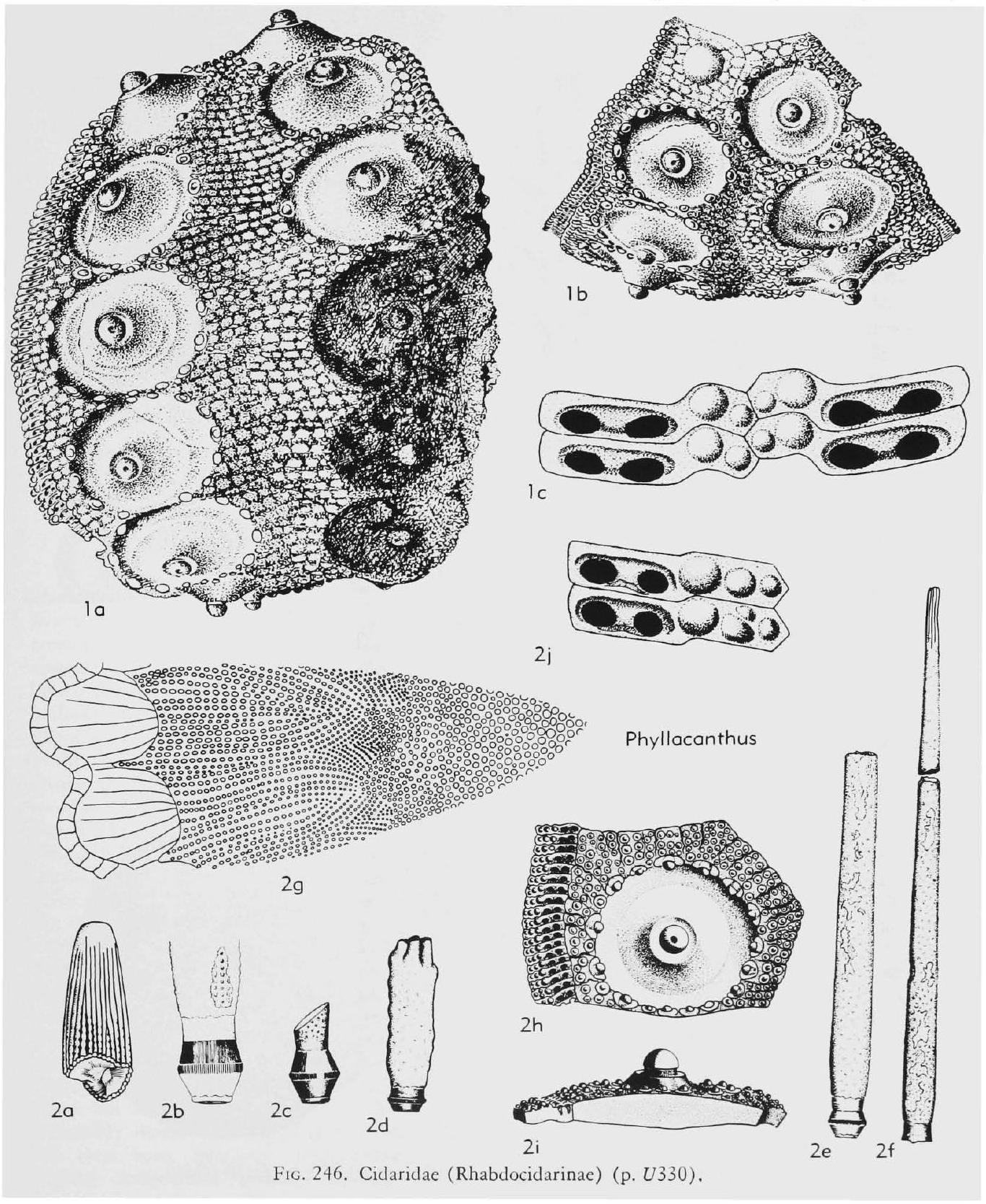
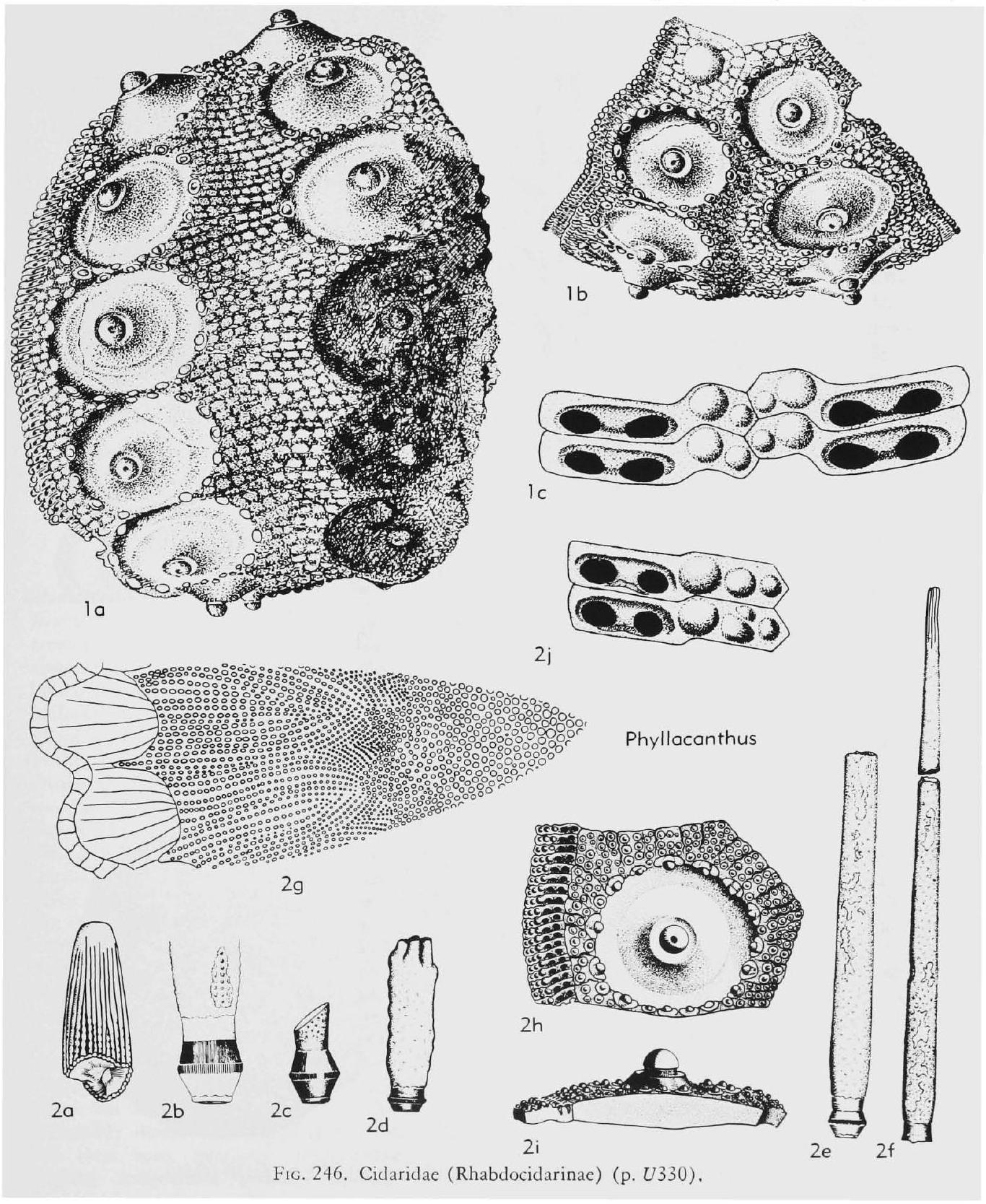
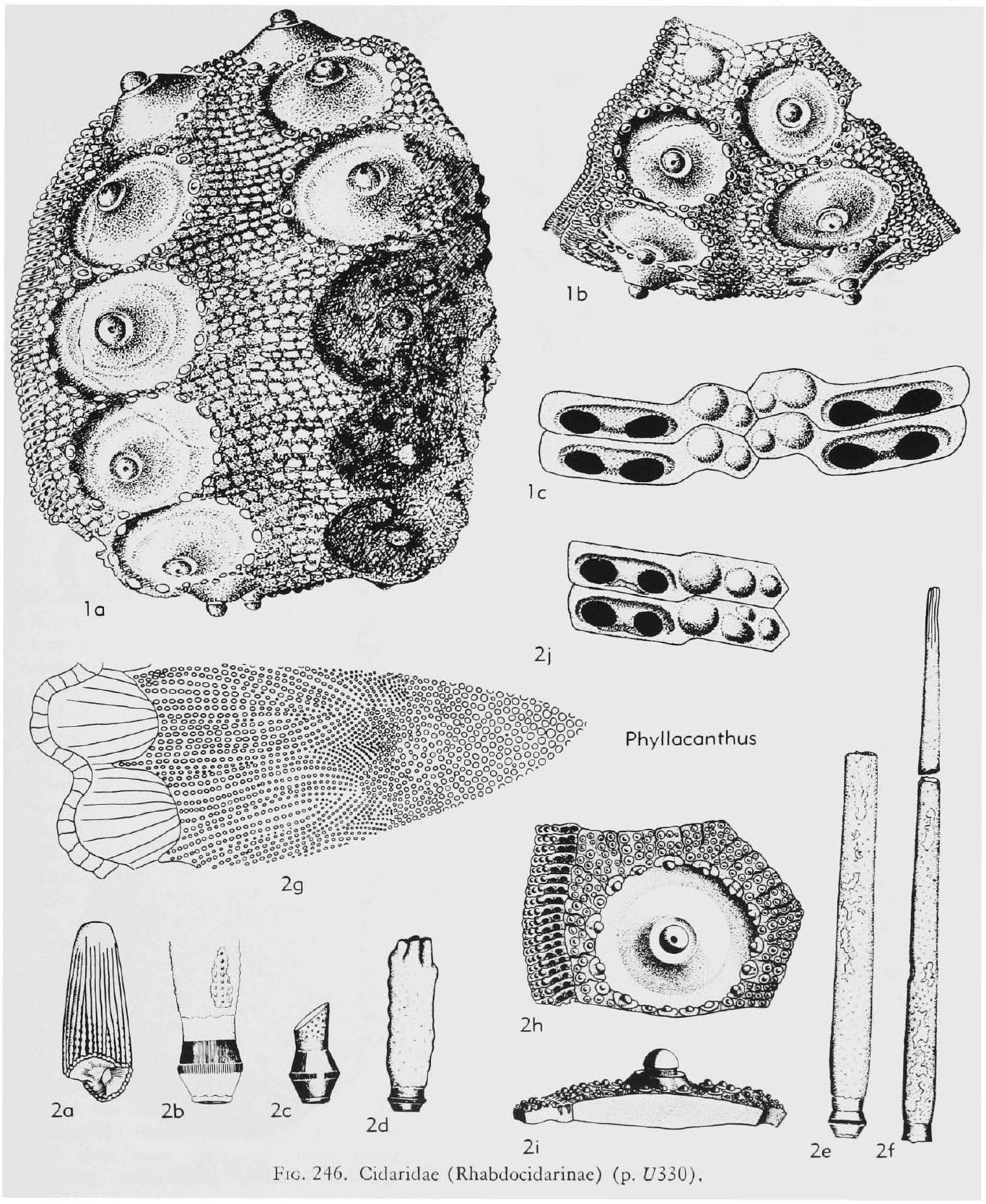
 Fig. 247,2. *C. cidanis (LINNE); test, lat., X0.75 (136a)
Synonyms
Cidarites, Orthocidaris, Dorocidaris, Papula
Geographic Distribution
Atl.-Medit.-Ind.O.
Age Range
Beginning Stage in Treatise Usage:
Rec.
Beginning International Stage:
Greenlandian
Fraction Up In Beginning Stage:
0
Beginning Date:
0.01
Ending Stage in Treatise Usage:
Rec.
Ending International Stage:
Meghalayan
Fraction Up In Ending Stage:
100
Ending Date:
0
Description
Areoles generally deep, well separated, primary tubercles noncrenulate adorally, aborally noncrenulate or (exceptionally) subcrenulate. Primary spines with more or less distinct longitudinal regular rows of spinules, sometimes forming ridges. Oral primaries flattened, smooth, slightly serrate. Large and small globiferous pedicellariae with end tooth; tridentate pedicellariae present. [It is unfortunate that the primary type of the order and family, Cidaris cidaris (LINNE), should belong to a small group of Atlantic forms characterized by the presence of end teeth on large and small globiferous pedicellariae, features of very slight paleontological significance; in fact, no valid fossil species has yet heen described for the genus Cidaris. On the other hand, since it is the primary type· genus, it has long been the practice to assign to it all fossil species whose precise generic position has not been established. ]n this sense the name is without taxonomic validity, and should therefore be distinguished in some way-such as "Cida,.;s:' or "Cidaris" s.l. (=Cidarius auen., non Cidaris LESKE).} [=Cidarites LAMARCK, 1816, p.52 (=jr. hom., ICZN Art. 20, 56b) - Moore.]
References
Leske, N. G., 1778, Jacobi Theodori Klein naturalis dispositio echinodermatum . . . , edita et descriptionibus novisque inventis et synonomis auctorem aucta: 278 p., 54 pl. (Leipzig) [Additamenta ad Kleinii dispositionem echinodermatum].
Museum or Author Information
Classification
Phylum:
Echinodermata
Subphylum:
Echinozoa (sea urchins, holothurians, etc.)
Class:
Echinoidea
Subclass:
Perischoechinoida
Order:
Cidaroida
Family:
Cidaridae
Subfamily:
Cidarinae
Formal Genus Name and Reference:
Cidaris LESKE, 1778, p. 74
Type Species:
Echinus cidaris Linné, 1758, approx. limited in 1761
Images
(Click to enlarge in a new window)
Fig. 247,2. *C. cidanis (LINNE); test, lat., X0.75 (136a)
Synonyms
Cidarites, Orthocidaris, Dorocidaris, Papula
Geographic Distribution
Atl.-Medit.-Ind.O.
Age Range
Beginning Stage in Treatise Usage:
Rec.
Beginning International Stage:
Greenlandian
Fraction Up In Beginning Stage:
0
Beginning Date:
0.01
Ending Stage in Treatise Usage:
Rec.
Ending International Stage:
Meghalayan
Fraction Up In Ending Stage:
100
Ending Date:
0
Description
Areoles generally deep, well separated, primary tubercles noncrenulate adorally, aborally noncrenulate or (exceptionally) subcrenulate. Primary spines with more or less distinct longitudinal regular rows of spinules, sometimes forming ridges. Oral primaries flattened, smooth, slightly serrate. Large and small globiferous pedicellariae with end tooth; tridentate pedicellariae present. [It is unfortunate that the primary type of the order and family, Cidaris cidaris (LINNE), should belong to a small group of Atlantic forms characterized by the presence of end teeth on large and small globiferous pedicellariae, features of very slight paleontological significance; in fact, no valid fossil species has yet heen described for the genus Cidaris. On the other hand, since it is the primary type· genus, it has long been the practice to assign to it all fossil species whose precise generic position has not been established. ]n this sense the name is without taxonomic validity, and should therefore be distinguished in some way-such as "Cida,.;s:' or "Cidaris" s.l. (=Cidarius auen., non Cidaris LESKE).} [=Cidarites LAMARCK, 1816, p.52 (=jr. hom., ICZN Art. 20, 56b) - Moore.]
References
Leske, N. G., 1778, Jacobi Theodori Klein naturalis dispositio echinodermatum . . . , edita et descriptionibus novisque inventis et synonomis auctorem aucta: 278 p., 54 pl. (Leipzig) [Additamenta ad Kleinii dispositionem echinodermatum].